The toy, the journey and the hobby — a process to creating fun
As a young game designer I held the goal of creating ‘fun features’ and ‘fun systems’ in service of a ‘fun game experience’ as my grail. In those early years, this relied on an internal logic that would be hard to articulate out loud.
It doesn’t take long in the games industry for anyone to realize how difficult it can be to talk about why something is or isn’t fun. Doubly so when starting from the pitch or prototype stage. Triply so as the size of a team and its stakeholders grow. And this challenge invariably comes home to roost with the designers as ensuring we deliver on that fun is our responsibility.
It’s not a surprise: we are constantly dealing with work in progress elements which we chip away at until we expose the fun core… or discover that we need to start anew. Much of this chipping is done via intuition and accumulated knowledge. We also test and make use of data, but these have limits: we cannot test everything in every permutation, and data is not always available nor is it infaillible. When those limits are reached, we fall back on our built-in intuition.
This means honed intuition is a powerful asset in a designer’s toolbox, but in a cooperative work setting unexplainable intuition is dangerous both to projects and to team cultures. Asking for trust and confidence without being able to provide a foundation for your arguments leads to doubt, even between seniors. And without a strong foundation to support yourself you are vulnerable to being swayed every which way by the wind, or of simply being rolled over by stronger wills for lack of convictions.
What we are covering.
This is a look into my own way of deconstructuring the word fun: splitting it into three phases with distinct nuances and drives, which helps dispel the vagueness of the word and establish a solid ground from which to manage feedback and criticism. It’s a process that is both deeply personal and that I have successfully used at scale in my leadership capacity at Wooga and Rovio when coaching and leading designers.
It’s an effective way of thinking at all stages of development, from pitches to live operations: because creating fun is a concept that is always at threat from poor decisions, lack of foresight, and improperly digested feedback.
If you are a designer, I hope to provide you with an interesting framework to promote creating engaging experiences. This is not a shortcut or miracle trick, but a way of guiding your process. Hard and creative work is still needed to get anything out of it. To various degrees some of the individual thoughts presented here will likely be familiar to you, but the high level view and way of tying them all together is what might spark your imagination.
If you are not a designer, there’s plenty for you here. Becoming more familiar with design concepts, with the importance of language, and understanding how to find some objectivity in what is often not objective, can greatly improve your personal and team dynamics. Designers are the gateway to turning ideas into actions, so knowing how to talk with them in a productive way is a massive boon to collaborating and ideating together.
The toy, the journey and the hobby.
The framework I use can be seen as a triangle. Each corner represents a specific mixture of player drives, cognitive load, engagement and investment that promote certain emotions and wants.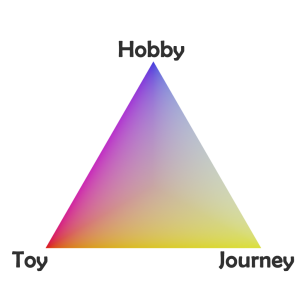 These corners are not neat little boxes that you can squirrel away ideas, features, systems, etc. within. They are a spectrum, and the corners can be seen as values to champion. It would be rare for a game system to be placed directly on top of a corner.
The toy form of fun is the simplest and purest. Put a toy into your hands and see what happens. Handholding is minimized to give way to agency, accompanied direct by kinetic or audiovisual feedback that piques your curiosity and pushes you onward.
The journey is a structured form of fun. The toys have been assembled on the table, and now they are spiced up through order, goals, storytelling and other finite loops. You can look back to see where you started from, and look ahead knowing more surprises are coming.
Finally the hobby is a form of fun that emerges when we become invested and yearn for more. Driven by initiative, repetition and out of the box desires, the game’s pleasure can now be found both within and outside of the game.
The forms encompass both a player’s mindset and a developer’s game systems. As an example, in the toy phase that could be a player looking for a reason to be engaged with a new game (“I’m not sure about this game and I don’t care about journeys and hobbies yet, I want toys first”) and a developer seeking to address a missing form of fun (“So many players don’t make it through the introduction to the game, do we have a toy problem?”).
Each form can easily lead into the next, but it’s not a requirement for a game to feature all three forms. Likewise, an individual’s experiences and psychology will color how they perceive these forms – and whether they can relate to them at all.
This last part – being able to relate – is especially why I champion this framework. We are not always the audience of our projects or even of individual features, so finding ways to hold strong convictions about the work we do, and being able to articulate them, is vital.
Deep dive into the toy
The toy is my favourite form to explore because it poses such a simple challenge, and simple challenges tend to expose all of the ugly problems that may be part of your design. Creating a great toy is a bit of a reckoning of your skills and abilities.
Put a Rubik’s Cube in a child’s hands and watch what happens. They don’t need to know the goal of the cube – the simple acts of rotating, twisting and turning the cube is fun. Of watching the colors change, feeling with your hands the resistance and clicks of the pieces and listening to those pops.
A good toy commands your attention – and hence is a powerful tool to engage new players with and convince them of the value of your game. That’s more or less how my dad introduced me to chess as a child.
He didn’t go over any rules right away – instead he’d setup the board, we’d pick our sides, and within seconds my pawns were making ridiculous tactical maneuvers, while my bishops teleported about and my king could break the turn order to evade checkmate. It’s only after giving me a chance to enjoy the elements of chess – the pieces, the board, taking turns – that we began to look at the rules. He knew he had my curiosity and he could now introduce some structure.
Here’s my favourite examples of toys in their purest form:
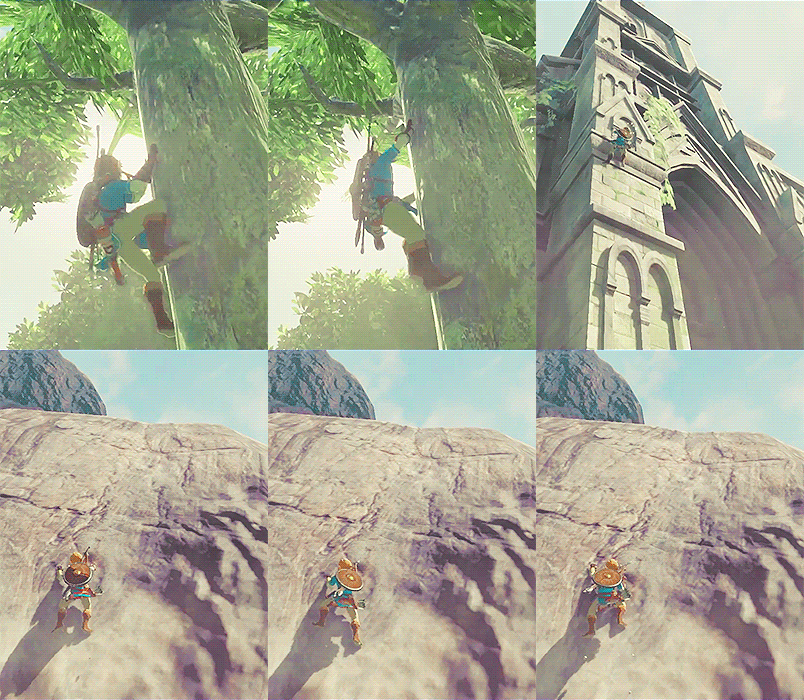
- Zelda – Breath of the Wild: Climbing about the environment, which famously captured Miyamoto’s heart.
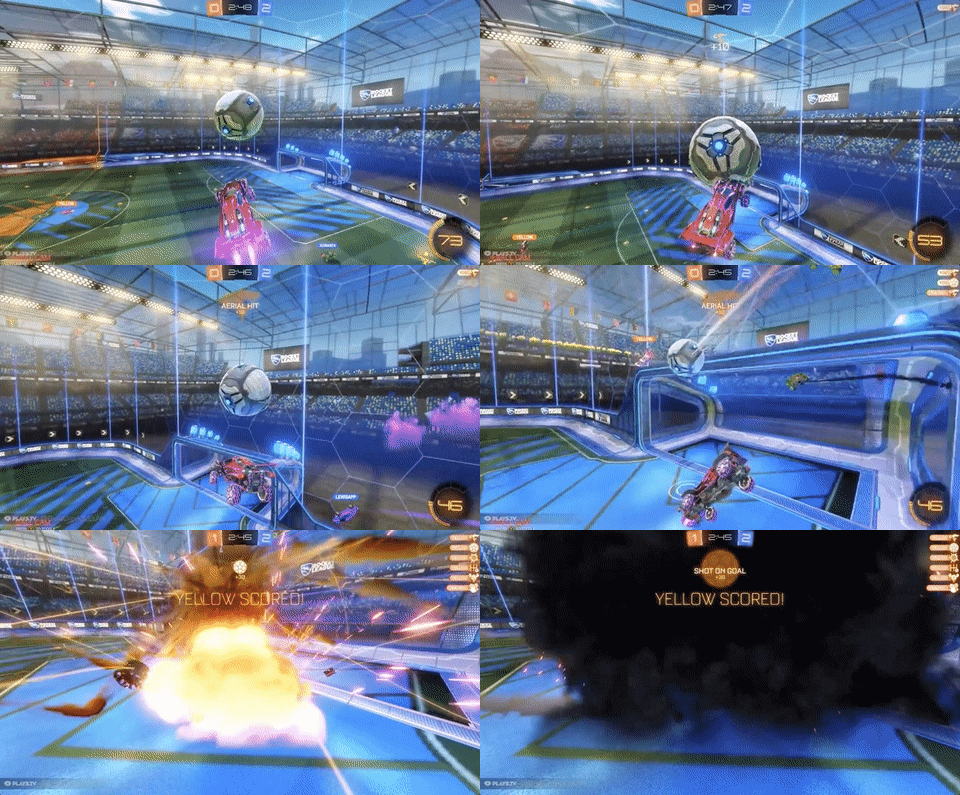
- Rocket League: Launching the ball around, exploring the physics of the vehicle and ball, and developing an intuition for both.
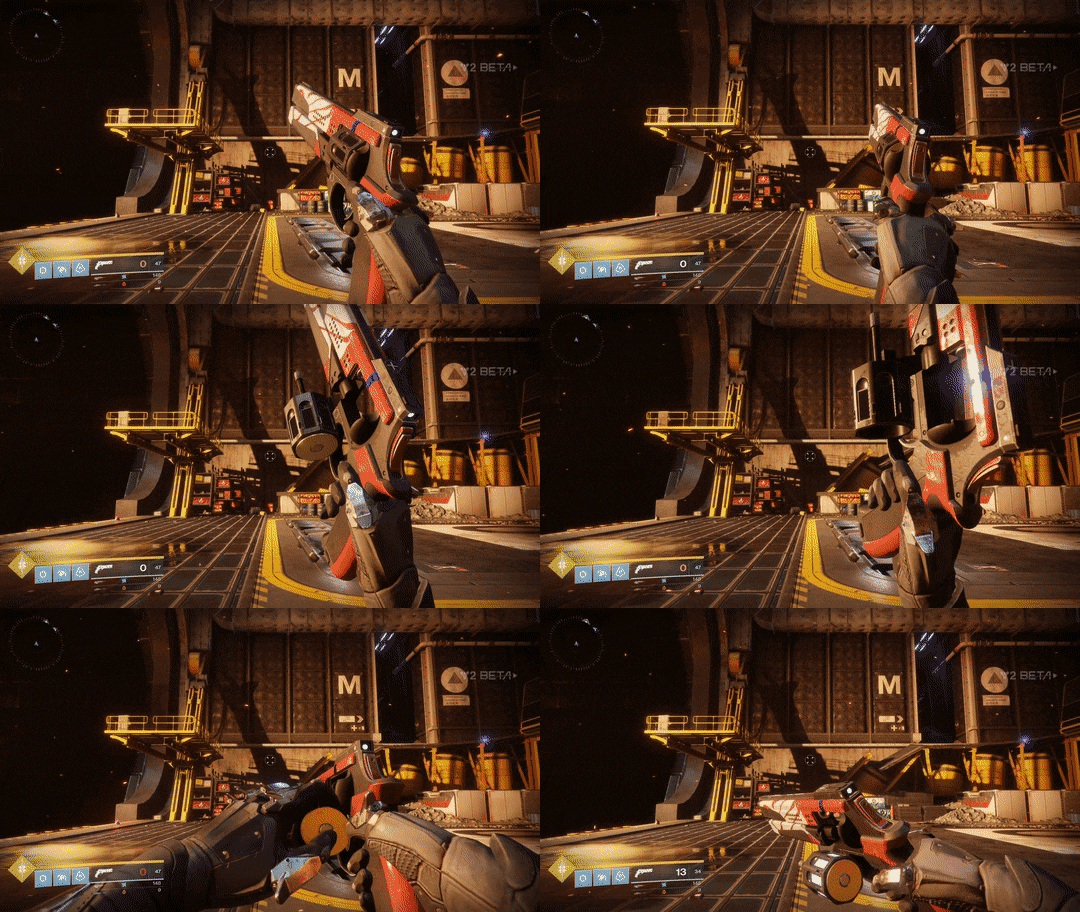
- Destiny 2: Gunplay and traversal mechanics, how small changes subtly alter your experience in noticeable ways.
- Minecraft: Deconstructing and reconstructing the landscape at will.
What ties all of these examples together? A strong sense of agency, a lack of long tutorials, the sheer simplicity of what is presented, and a possibility of mastery. All of it framed by superb audiovisual feedback and excellent responsiveness.
You are allowed to explore the toy at your own pace, to make your own discoveries and your own mistakes. Your learning process is guided by your worldly experiences, meaning that the experiences that you feel and the memories that you make are yours and yours alone. This is a staggeringly powerful form of agency.
In Breath of the Wild, it’s the sense that something as simple as climbing and clambering allows you to reach places that would typically be off-limits in almost any other game. The emboldening power that comes from being able to point at a distant mountain and having the certainty that you could climb it. Of making the best out of your stamina bar to go beyond what the developers expected you to reach.
In Rocket League it’s combining the driving mechanics with the physics of the ball. Of performing maneuvers and tricks on the ground, then suddenly realizing you can catch the ball in the air and that the walls are an extension of the playing field. Of developing an intuition over this highly kinetic object – the ball – and realizing just how much control you have over it, which allows you to develop a mastery. And all of that happens in a training room with no opponent and no game mode rules.
In Destiny 2 the gunplay is defined by how smooth it is. Every gun is joyful to fire, and as every gun is a combination of stats and perks they all possess unique subtleties that are worth exploring and experiencing. Meanwhile character movement is highly kinetic and the superhuman jumping abilities push you towards exploring the landscape and testing its limits. All backed by impactful sounds, stylish animations and gorgeous art direction that give wheight to your every action.
In Minecraft it’s your ability to excavate, place and combine blocks taken straight for the world itself. The fantasy of LEGO but at a far bigger scale, with all the prep work done for you and with endless bricks. It compels you with the mystery of what could lie under this block; where this cavern leads; what biome lies beyond these mountains. As your mastery increases you come to realize you could dig straight into the core of the earth or build bridges high in the sky. You could settle for a dead simple house or flex those little cubes into something far more impressive.
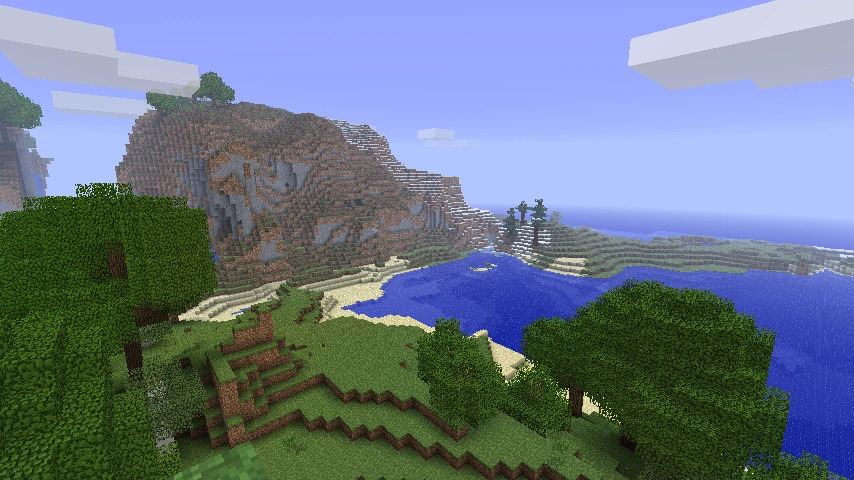
You could have ridiculous fun in Breath of the Wild by simply exploring the world, without needing combat, puzzles and a story. You could spend a lot of time understanding how to combine your driving and knowledge of the ball physics to perform wild tricks and score seemingly impossible goals by yourself in practice mode. You could will away hours in Destiny 2 getting a feel of the guns and finding how to best defeat each enemy type in the Cosmodrome without touching the story or multiplayer aspects. And you could perpetually generate Minecraft worlds simply to experience the feeling of mystery that comes from setting foot in untouched lands.
These are examples of what happens when you crank your design to achieve maximum “toyness,” but you can still pull back on some of the defining aspects and still succeed at creating a toy. Killstreaks in Call of Duty are great toys: markers of success that open up a toolbox of possibilities and also stroke your ego. But they require a good deal of UI/UX and teaching the player. They’re not as easy to intuit as the aforementioned examples.
Toys are not necessarily instantaneous. A fresh run of The Binding of Isaac is really unimpressive. Once you begin picking up upgrades, though, you start feeling giddy at the potential you now hold. And as synergy between upgrades kick in and wild effects are triggered, a sense of awe settles in. You are doing ridiculous things now, but what other ridiculous effects could you still pile up? What about next time?

Toys can also be born from bugs and unintended use of mechanics. Look no further than ‘coptering’ in Warframe. Players figured out how to combine two mechanics to launch themselves through levels at staggering speeds. Coptering hits all the notes of a toy in a brilliant way and became a phenomenon, but the developers never intended for players to achieve this, hence it was eventually addressed. And while the toy was fun for those who used it, since Warframe is a multiplayer game it was detrimental to newbies and players not interested in this type of extreme speedrunning experience. (Warning: loud sounds).
In the same field, flaws in a game’s balance can also become toys of their own. Figuring out a particular combo of skills by yourself that allows you to lay waste to swathes of enemies far beyond what a developer had intended is a tremendous form of agency. Spotting a crack in a game’s economy that allows you to grow out of control is the same. Of course this can be a detriment to the overall game experience, but as developers we can anticipate and cleverly incorporate some brokenness to grant players this feeling of one upping the creators. Warframe embraces this openly: new weapons are constantly added to the game, so it’s not all that bothersome if some of them clearly power creep the rest. Meanwhile Mega Man games traditionally have a secret mechanic where each boss has a unique, unspoken weakness that can be exploited to trivialize their battle. Few things will be as memorable to players as making these discoveries.
Toys are not limited to only straight up game systems. The interfaces of Supercell games are themselves a type of toy: snappy, responsive, highly kinetic and full of energy. They are a joy to flick and tap through. The toy quality oozes from them and makes you want to scroll and go about your game business. They help put you into a good mood before you’ve even touched on any actual gameplay systems.
Finally, knowing your audience is still critical no matter how fun the toys you are making are. A toy specifically made for an FPS player will look radically different than a one made for a 4X player. ‘Crafting your version of mankind’s history’ in Humankind is a powerful promise to a 4X player that can be turned into a variety of toys, but those toys are likely to fall flat to someone who has no interest in strategy or history. Know who you are making your toys for.
My favourite application of the toy is when tasked with creating a new game. I start by thinking of the toy that will be at the heart of the core game experience. What package of mechanics and systems hold the potential to excite and engage? To do so with minimal hand-holding, UI or rules? Can I create something within those constraints that will leave you with a feeling of agency and ownership? Will you remember this toy fondly and share these memories with others?
Since a toy’s purpose is to create excitement, it can be used during a player’s first session as your unique selling point or differentiator. Introduced later during the player’s journey the toy is an experience refresher and re-engager. Promise a player more toys on the regular and you hook them with a hobby.
This is especially important in the highly saturated F2P industry. With an endless stream of games copying each other – with competitors backed by investments that dwarf your budget, proven genre expertise, impactful IPs, or simply a willingness to brute force success through player acquisition – can you make your initial experience a toy that will capture the heart of your players?
Let’s wrap up the toy for now. It is defined by the sense of wonder and curiosity it instills. It holds a promise of possibilities and mastery. It makes you want to engage with it, poke and prod at it, and push the boundaries of what it can do. It excites your senses. It gives you agency and promotes your intuition. You may choose to increase your mastery of a toy, or leave it as it is and still enjoy it.
Diving into the journey.
Toys don’t necessarily have lasting power. As delightful as our Rubik’s Cube might be, not everyone will continue playing with it and session after session more owners will churn out. The journey phase of the fun framework is about about creating finite progression loops and weaving them together: game systems, gameplay variations, narrations, and so on. These loops are a glue that hold the experience together and overall increase the perceived value of toys.
Large loops rivet us through the grand promises they hold. Saving the world, untangling juicy relationships, defeating the final boss, being the #1 player on the leaderboards.
Meanwhile small loops provide a sense of progress and accomplishment, even with only limited time or effort. Leveling up a character, completing some daily tasks, progressing in a battle pass, discovering a secret map location, completing a side quest.
Most journeys are defined by the developers (“here is a great story for you to experience”), but the most powerful ones spring from the players themselves when they feel inspired by the game (“I want to finish the game without dying once,” “I want to lead my guild through this raid”).
Let’s follow up on our initial examples and then some:
- Zelda – Breath of the Wild: Exploring the map with your suite of slate powers, and seeking out shrines to improve hearts and stamina.
- Rocket League: Discovering new game modes, and progressing in the battle pass.
- Destiny 2: Playing through the game’s various campaigns, completing daily bounties, unlocking a weapon pattern for crafting.
- Minecraft: Reaching the next tier of equipment quality, building your dream house.
- Mass Effect 1: Experiencing the individual story arcs of each party member, finding romance, resolving the campaign.
When trying to create great journeys we need to focus on their impact on the player. What will the journey give to the player and, in turn, what will it demand from the player? How does this journey feed into other journeys?
I approach journey planning as I would writing a story, through a narrative structure. An exposition (a start), a rising action (progress), a climax (completion), and falling action (processing the experience).
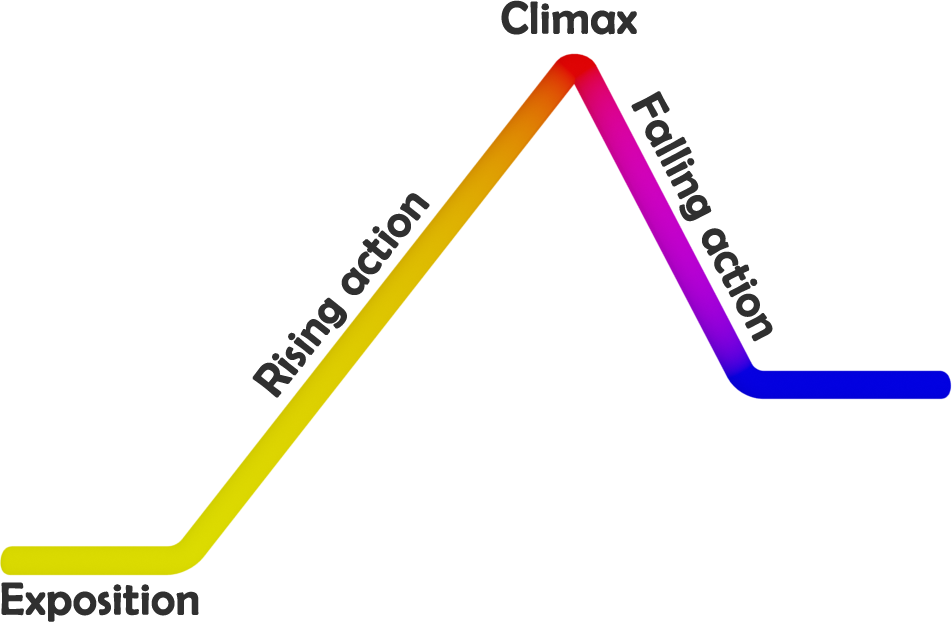
The start phase of a journey is defined by wonder. Something new is about to begin: a new story, a new progression vector, etc. It’s exciting and the realities of the journey have not surfaced yet, such as how long it will take to complete or how difficult it will be. It’s a very eye candy moment.
The progression phase is defined by investment and palpable progress. The player is now engaged with the journey and its loop(s). They want to feel like they are advancing towards the journey’s end goal, and that they their time is producing meaningful progress.
The end phase is defined by pay off and satisfaction. The player has undergone all trials and the journey has come to an end. The phase is driven by excitment of finally obtaining the pay off, mixed with the feelings of pride and satisfaction.
The processing phase is defined by lasting value. Being able to look back at a particular journey and still feel that the time and energy was worth the pay off, and how it meshed into other journeys.
Each phase has its own quirks and pitfalls to work around. Starting a new journey is exciting, but starting too many journeys at the same time overwhelms, induces choice paralysis, and overall lowers the value of each journey. MMOs were quite guilty of this, by throwing dozens upon dozens of quests at players entering an area for the first time. This is also a significant problem for any successful LiveOps game: on-boarding new players into an environment that has been endlessly adding toys and journeys is no easy feat.
Making progress on active journeys feels good, but journeys can cannibalize each other when progress is too exclusive to one over another. Alternatively, players want to feel like their progress is advancing at a meaningful pace, but what is a meaningful use of time for one person can be another’s absolute waste. Halo Infinite’s Battle Passes initially had a public perception problem: not because they were unrewarding, but because they were far too slow to progress, and the grind itself demanded too much of the player.
Bad ends can sour an otherwise positive journey. There are no better examples than loot boxes: a player steadily earning premium currency every day finally gets to make his gacha purchase, only to be rewarded with nothing of value. Unsurprinsingly we are seeing a growing push for regulations, and the industry itself is becoming more open to alternative ideas.
Finally, context is everything when looking back at a finished journey and processing its value. An unfortunate example of this is the end of the Mass Effect trilogy. The series that had prided itself on allowing players to shape the journey of Shepard and the galaxy now had to wrap things up, and it did so in a way that many fans felt had sabotaged all of the choices and character growth they had developed over the three games. However pleasant the journeys big and small from Mass Effect 1 to 3 had been, now these fans could only look back and feel that the time they had invested into them had been invalidated.
Being open to different perspectives is always important in design, but it is doubly so when dealing with journeys. It’s easy to see why a strong story is appealing, but if you’re not into live service or F2P games then something like daily missions might come off as unfun. But to a content-vampire player who always needs more to do, daily missions can be quite engaging and provide a reason to vary their playstyle or pattern. Someone who only cares about experiencing the story of Ghost of Tsushima might roll their eyes at the idea of discovering every collectible, while those countless collectibles are a strong journey to another. As developers we would want both players to find satisfaction in the game.
Idle and incremental games are mechanical journeys cranked to the maximum, and an example of how one can mostly circumvent toys and still find success with a specific audience. The other side of this coin are so-called “walking simulators” like What Remains of Edith Finch and Gone Home, which solely rely on their narrative journey to pull you in and engage.
To recap the journey: it is defined by a beginning and an end, as a structure that can be clearly understood and all of the expectations that this entails. It is the exciting feeling of starting something from scratch, the hunger to make progress, and the satisfaction of finishing it. It is a glue that binds toys together and gives them a greater meaning. Weaving together small and large journeys, allowing them to mingle, overlap and diverge is how this phase constantly renews itself.
Diving into the hobby.
The hobby is a peculiar phase of fun. Players are drawn back to the game regularly; they develop idiosyncrasies that can appear baffling to people from outside the game; their interest in the game can now extend to social platforms. Simply talking or thinking about the game can produce as much fun as playing. In many cases, the feeling of belongingness is the only reason one may stick with a game that they would have otherwise churned from.
Broadly we can think of the hobby phase as having two facets: the hunger for more and identity integration.
The hunger for more is fairly straightforward: the expectations of receiving new toys and journeys on a regular basis. Seeking out or creating game mods to alter the experience. Perceiving the game as a project, rather than temporary entertainment. We support this facet through a promise of more, such as a seasonal model and expansions, or through player tools that allow for the creation of new content. It’s fun because we are invested and wants more toys and journeys.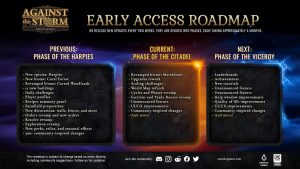
Identity integration, on the other hand, is about how the game becomes a part of your identity. Finding pleasure in talking about the game. Keeping up with the news and updates. Belonging to and engaging with a community. Creating or consuming online/influencer content. To accomplish this we’re generally looking at breadth and depth to create opportunities for self-expression, experimentation and discussion, plus systems that allow players to discover, connect and gather with each other. It’s fun because we are deep into the game and we socialize through it.
The importance of these two facets fluctuates greatly over a player’s lifetime. For an average player in a typical game, the hunger for more is typically more important, until the game begins bleeding into their identity and friendships are forged. At this point identity integration can overtake the hunger in value. The reverse is true in the case of social games such as VRChat and Sky, with identity integration being the key. There is a lot of nuance to this, and social design is a bit of a passion of mine, but that requires an article of its own.
Let’s continue our previous examples:
- Zelda – Breath of the Wild: Looking up tricks and bugs, speedrunning, sequence breaking.
- Rocket League: Collecting as many cosmetics as possible, looking forward to the next season and rotating game modes.
- Destiny 2: Keeping up with the weekly content release of each season, awaiting the next developer update/TWAB.
- Minecraft: Using tools to plan and import complex structures into the game, playing with mods.
- Mass Effect 1: Theorizing about the story and where it will go next in ME2 and ME3, writing fanfiction and shipping characters.
The business purpose of the hobby phase is retention and mindshare, so unsurprisingly the ultimate goal of any Game as a Service is to motivate players into entering this phase of fun. Everything done within these games is more or less in service to that end. But it’s not just GAAS that benefit from players entering the hobby phase. Sandbox games that encourage creative and out of the box thinking naturally funnel players into this phase with little effort. More traditional games have a tougher time climbing this hill, but they have their own tricks.
A flourishing hobby phase is a dance between developers and the players. A good first step in planning this out involves building a routine that is transparent to the players. Typical routines can be a roadmap (here’s what we plan on doing over the next few months), a release schedule (there will be a new season every four months), a dialogue (we engage with you in our social channels and build the next release together), and so on. What’s important is consistency and getting that initial buy-in from players. Tantalizing with the promise of new or updated toys and journeys is something that appeals to all.
Then comes the fun part of feeding and sustaining both facets.
The hunger for more is fairly straightforward: provide more. But that requires toys and journeys designed in such a way that you are able to create more in a timely fashion (remember our transparent routine?), and that has a tremendous impact on how you should approach not only their creation, but the whole project.
Let’s pick at Destiny 2 for a moment to illustrate this. The game was initially developed as a traditional boxed game with big expansion packs as its business model, to eventually be replaced by a Destiny 3, and supported by multiple satellite studios. The promise was: our expansions will be big and we’ll maintain the quality level we established in the base game. Once Bungie went independent and lost access to their satellites it was clear that this promise could not be sustained. Shadowkeep was a short and light expansion, and the seasons were light on content and heavy on the grind to create engagement.
Things turned around as Bungie was able to figure out a new promise to the players and how to organize the developers and the game code to make it possible and sustainable. The current state of Destiny 2 is wildly different from the Shadowkeep era: better and more content, ongoing storytelling, and frequent sandbox updates. The key to this was creating toys and journeys that were scalable and/or reusable. Big exciting things are developed for the expansions, while smart dressing up of older content & mechanics and mixing up the combat sandbox keep seasons fresh.
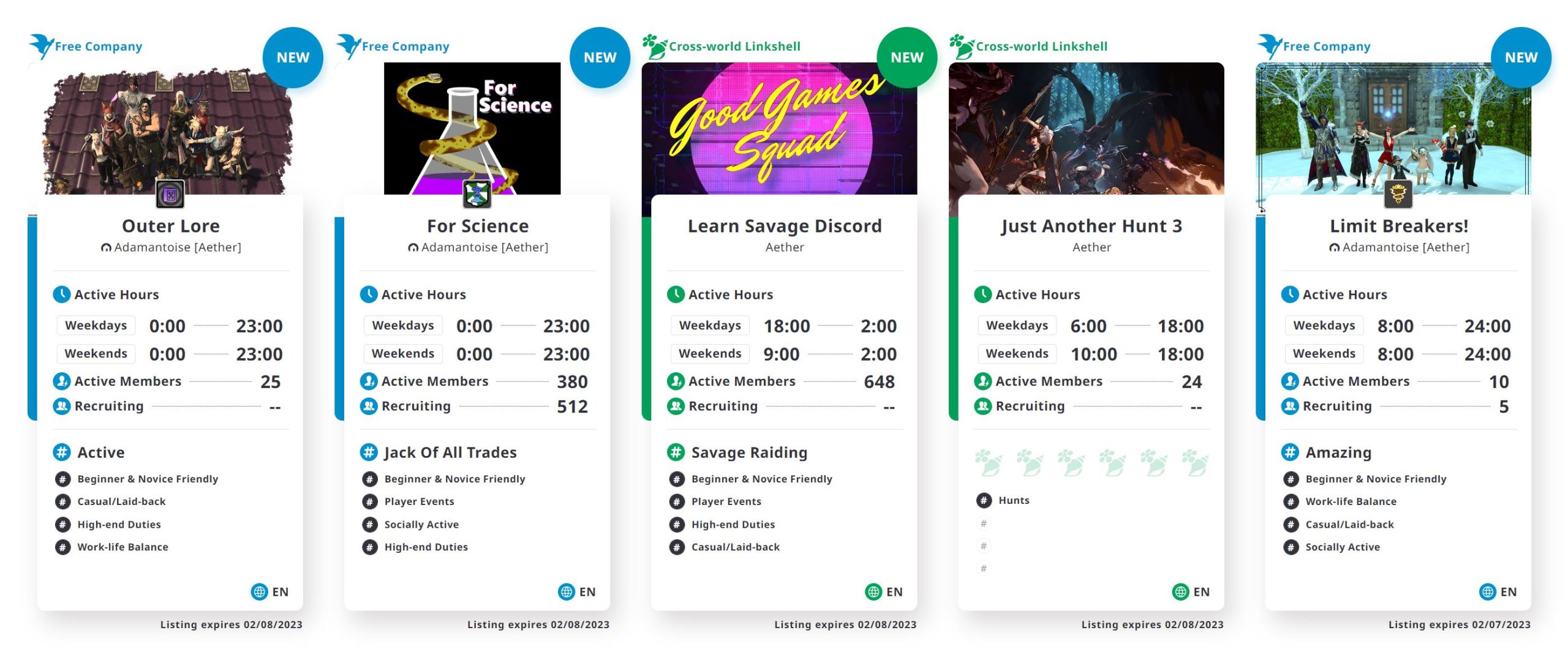
Identity integration is a much wider facet. Discussion is a great part of this, be it in person, in forums or as a content creator. Breath and depth within the game is an excellent facilitator for this. Character builds in an RPG, choices in a narrative game. Information scarcity can add an extra layer to this. Dwarf Fortress can be extremely obtuse and encourages all but the most hardcore to use wikis and other players as a source of information. Player gatherings is supported through in-game guilds and communities, but there is so much more to be done on this front – Final Fantasy 14’s Community Finder is a great example of going a step beyond the bare minimum of most games. Self expression is powerful and comes in many shapes: creative projects in Minecraft, music instruments in Star Wars Galaxy, and so on. Live streaming is another aspect of self expression that deeply touches on identity integration.
These facets are not mutually exclusive. Hades is a great example of blending both together: Supergiant Games had a clear roadmap with specific deadlines conveyed to the players. Fans were encouraged to join the Discord channel and significant aspects of the game’s balance was crowdsourced from there. Patch notes clearly labelled which changes were taken from the community. This created a perfect routine: the promise of more content at set intervals + the ability to join a community and to impact the game’s future = players had a reason to get involved and were rewarded for doing so. Players knew when to return to discover new content. Players who churned still stuck around for the community.
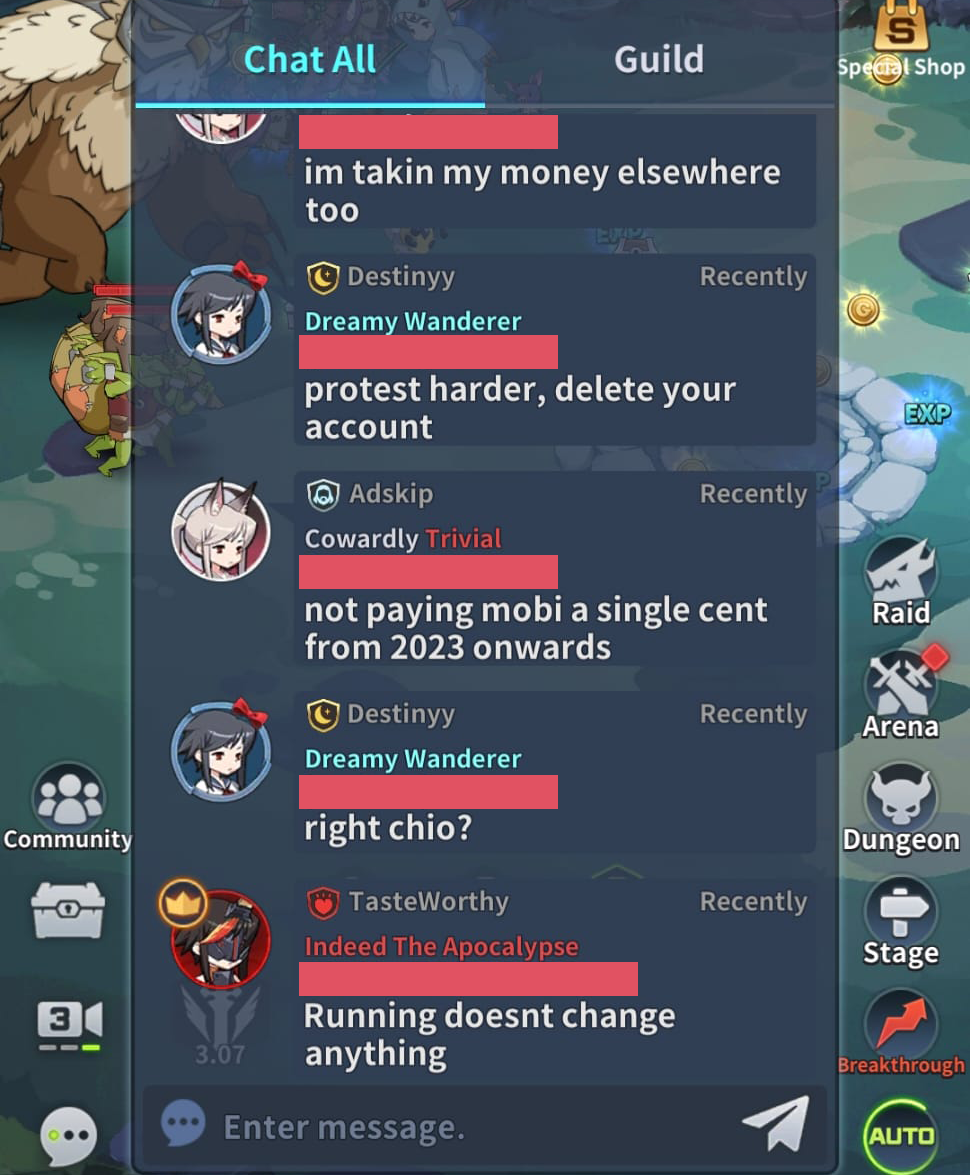
Another game I find noteworthy here is Blade Idle. At the heart of it is an incredibly simple toy: you character idly slashes at endlessly respawning enemies in a tiny arena. This toy never really changes, instead the game throws a seemingly endless number of journeys at you and promises you ever more of them. But pay attention to the global chat: players regularly talk about how Blade Idle is like a tiny cozy home to them. Names are recognized and greetings are regularly exchanged. Topics mirror what you’d talk about with friends: how they’ve been doing, life advice, support, and so on. They’ll even poke fun at the game being not that fun – quite harshly too – but they always come back to continue socializing.
Let’s pull back towards more traditional story-driven games like Mass Effect and Ghost of Tsushima. Neither game is specifically known for their sandbox or modding, but chiefly for their big, movie-like stories and setpieces. That’s their ace to pulling their fans into the hobby zone: stories that span multiple games trigger discussions, speculations, debate and arguments. Highly social activities. Likewise for endearing characters. Mass Effect in particular is great at this, as you are able to replay the games and explore the outcome of different choices which further fuels discussions. Who did you save? Who did you romance? Who survived?
Despite giving the impression that this is a phase of fun that you build up to, for certain players it can also be their entry point thanks to social osmosis (another reason why identity integration is so powerful). Take Minecraft: through watching players post their creations online, a bystander can be motivated into buying the game and diving right into a gargantuan project of their own, entirely bypassing the toys and journeys of the game. A game doesn’t even have to be released for players to already make it a core part of their personalities.
Let’s recap the hobby: defined by the sense that the game is bigger than it is because of what it promises you, interwoven with the feeling that is has a gravitational pull on your life. It is something you can talk about with others, that stimulates your imagination and holds the potential to feel like a second home.
Seeing through the lens of this framework.
Let’s now take everything we’ve been discussing and apply it to actual systems.
The traditional battle pass: refreshing it with toys and journeys?
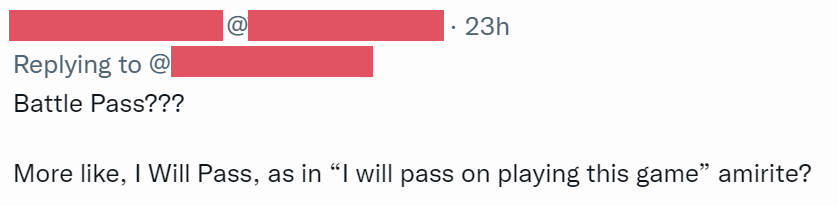
Battle Passes are now common fare, to the point that when a new game reveals that they are making use of this system they are often met with scoffs, annoyance or simply fatigue from vocal players. While not necessarily an issue, it does result in negative feelings that media outlets and other players can latch on and further amplify. A recent example of this a leaked image of the upcoming Kill Squad’s main lobby, which features a Battle Pass tab. It has angered many players and instantly set the tone for discussions online.

Let’s say for this exercise that we want to freshen up the Battle Pass experience. Can we introduce a toy-like element and diversify the journey to make it more interesting?
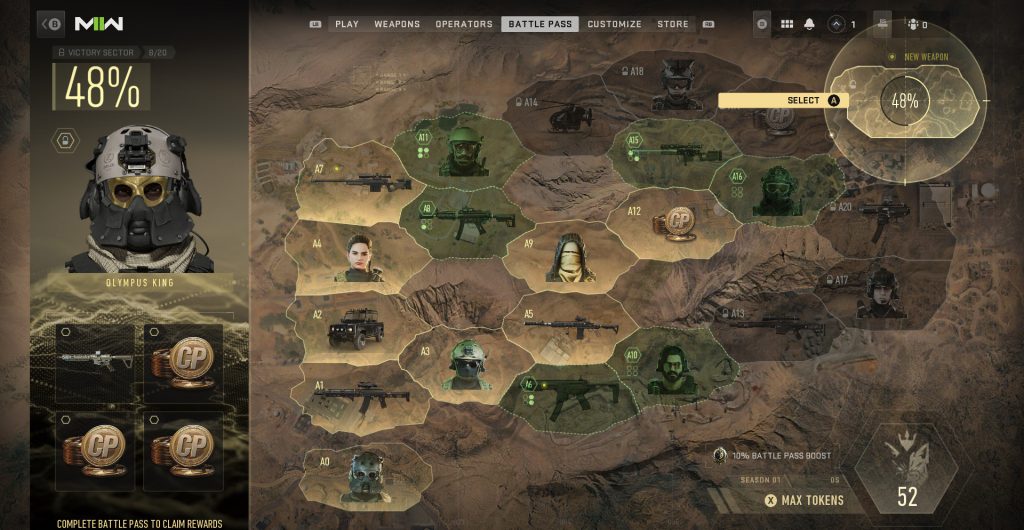
- Instead of a linear system let’s imagine that this new battle pass is a branching tree.
- A player can decide where to progress within it: rather than being given the next reward in line, they can advance through the various branches.
- This allows them to focus on what they feel is most exciting or worthwhile first and leave the rest for later.
- We also now have journeys-within-a-journey, as a player is able to set specific progression goals through self-determination.
That’s actually what Call of Duty has done. It definitely piques your curiosity and feels much more tactile than a typical Pass: there’s information to absorb, choices to be made, you can intuit your way through or analyse an optimal path that suits you. You are given much more agency than in a normal Battle Pass.
It does sound good, on paper at least. But there’s an elegance to the Battle Pass that is lost in the process.
- The linearity provides clarity. When you are asked to pay 10$ for the pass, you can easily scan it to determine if it’s worth your money or not. A branching tree is far less clear.
- The linearity provides simplicity. You don’t need to fuss over which path is better or worse; of being scared of making a sub-optimal choice.
- Compulsion to actually complete the entire pass could be significantly diminished. If you’ve obtained everything that matters to you, it can be difficult to find the motivation to go further.
As with any toy, it’s important to ask yourself if players really benefit from adding a new mechanic that requires a degree of mental engagement. A toy in a new game mode is isolated to that game mode – you can choose to not engage with it. But a Battle Pass is something that is omnipresent in your play sessions. It’s another system you’ll have to engage with. Every player has a different limit before the cognitive burden becomes too much and they churn.
So whether our toy-ified Battle Pass is smart or a swing and a miss fully depends on the game it belongs to and the audience it caters to.
Chaining toys into journeys into a hobby: MMO Raids.
Raids in MMOs are a great example of putting all three phases of fun together, while dealing with the issue of content starvation that happens to hobbyists.
Let’s quickly pick at King’s Fall from Destiny 2 to illustrate this. We can grossly break down the raid into six parts with distincts mechanical concepts shared between the team of players.
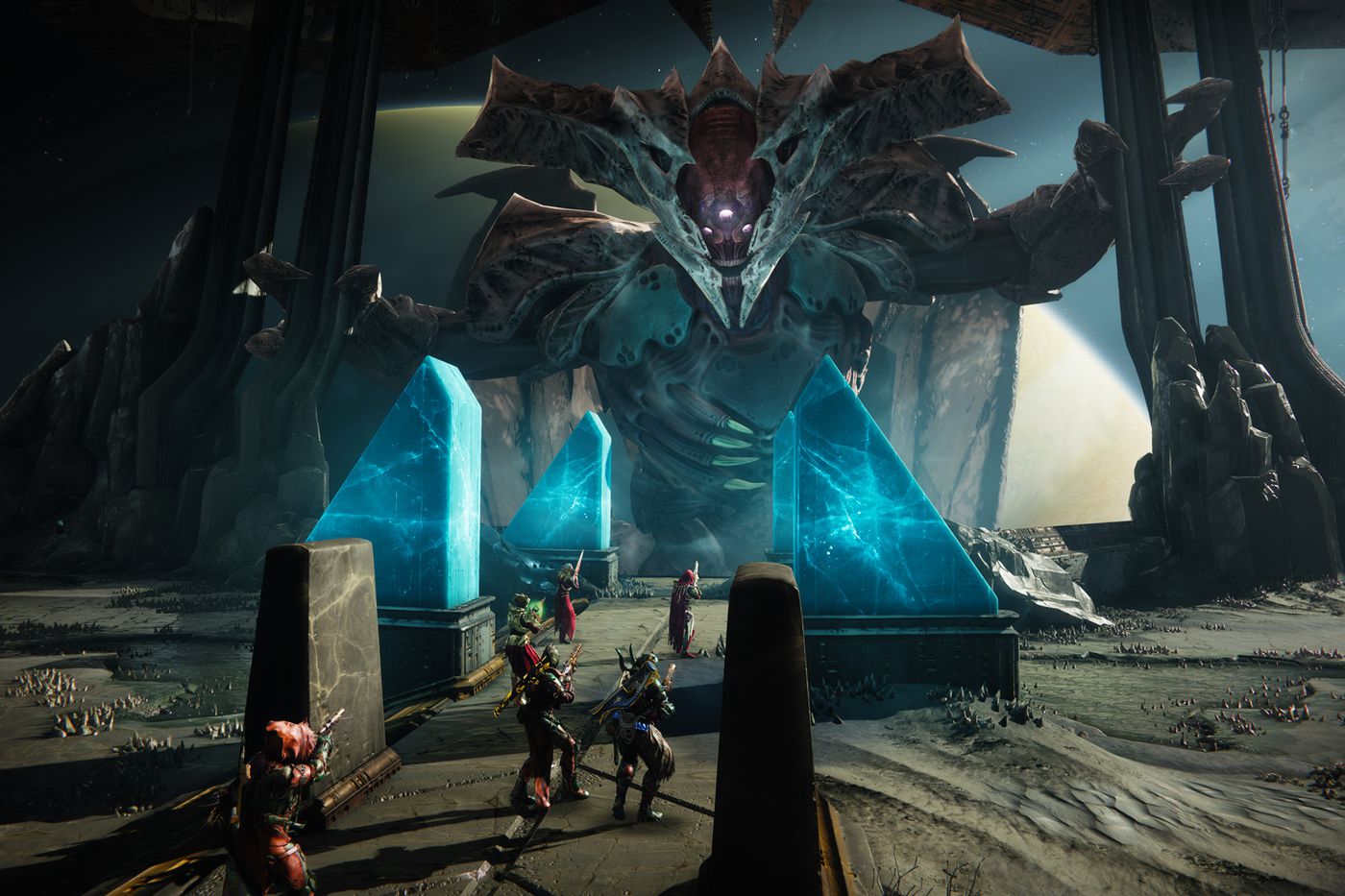
- Part 1: Fetch & coordination, in a forgiving setting.
- Part 2: Role swapping, positioning, target hunts, timer management. More technically demanding than part 1.
- Part 3: Similar concepts as Part 2, but significantly more time constrained and with information scarcity.
- Part 4: Similar concepts as Part 2, but more freedom to roam and reposition than Part 3.
- Part 5 & 6: All previous concepts with additional twists and increased pressure.
- A hard mode also exists which provides additional challenges and rewards.
Each concept players must deal with is a toy: puzzle-like mechanics, that allow for a sense of developing mastery, encourage creative thinking, and are backed by satisfying feedback. The reuse of the toys, with little twists, helps players develop an instinct and prepares them for the next set of challenges.
Learning these toys is a journey of successfuly chaining these toys together to completes the raid, something that has a clear beginning and end with a payoff both mechnical and narrative.
Replaying the raid to grind for loot, learning every role, tackling the hard mode, and looking forward to the next raid are all aspects of the hobby, as the player is now engaged above and beyond the singular experience.
The development value of the raid is addressed through its scalability: random weapons and armors, weapon patterns for crafting, achievements to complete, and a harder version with recolored loot and slightly better performance.
Some final words.
It’s been a long journey, from starting as a junior designer to becoming a specialist and lead to finally writing this article. It has taken me across seven countries and seen me fold and recreate myself enough times that I stopped counting, a process which I hope never stops. For me this was a great opportunity to work through a large backlog of thoughts and refine out a lot of little inconsistencies and edge cases. For you I hope it provided something of matter – whether it is a process that you can integrate partially or fully into yourself, or a point of view that helps reinforce your own diverging methods.
You know where to find me if you want to chat about this.